


Rack Protection & Pallet Racking Protectors
- 1











Pallet Racking Protection Buying Guide
Effective rack protection starts with understanding where pallet racking is exposed to forklifts, pallet trucks and other materials handling equipment. The right solution may include rack upright protectors, rack leg guards, floor-mounted steel protectors, rack end barriers or flexible impact protection, depending on the warehouse layout and the risks identified.
Premier Storage supplies pallet racking protectors for warehouses, distribution centres, manufacturing sites, stockrooms and other industrial environments. This guide explains how to assess impact risks, compare the main types of protection and choose suitable guards and barriers for different areas of a warehouse.
Rack protection should be selected for the actual site rather than treated as a one-size-fits-all accessory. Consider vehicle routes, turning areas, exposed rack ends, upright dimensions, aisle clearances, floor conditions and previous impact locations before choosing a system.
Shop Rack Protection by Type
Start with the type of area you need to protect, then check the individual product dimensions, fixing method, material and intended application before ordering.
Upright & Rack Leg Protectors
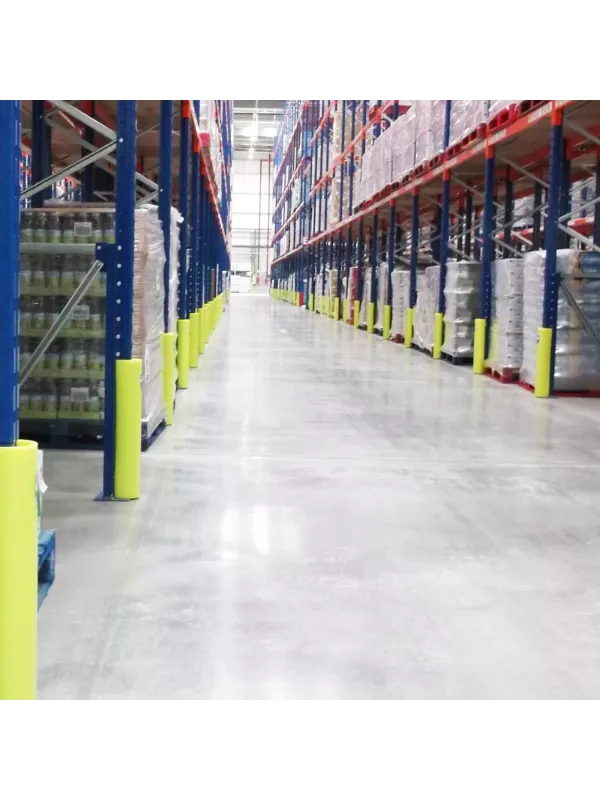
Compact protectors for individual pallet racking uprights, including high-visibility guards designed to shield the lower section of vulnerable rack legs.
View Upright ProtectionHeavy-Duty & Rack End Protection
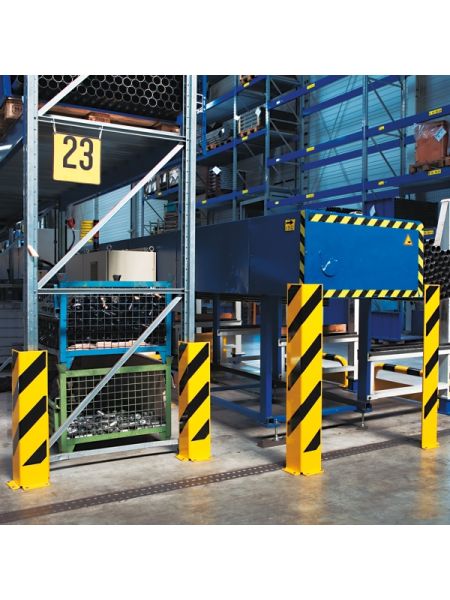
Floor-mounted steel guards and end-of-aisle barriers for exposed corners, uprights and complete rack ends where a larger protective zone is required.
View Rack End ProtectionFlexible Impact Protection
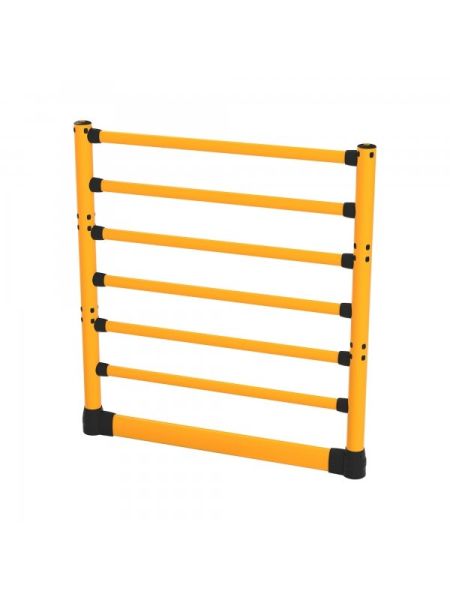
Flexible barrier systems for separating racking, vehicle routes, machinery and work areas while managing impact energy through controlled deformation.
View Flexible ProtectionAssess Rack Impact Risks Before Choosing Protection
Rack protection works best when it responds to the actual vehicle movements and impact risks within the warehouse. Review the areas where racking and materials handling equipment interact before deciding what to install.
Map vehicle routes and turning areas
Identify where forklifts, reach trucks, pallet trucks and other equipment travel, turn, reverse or approach the racking.
Identify exposed uprights and rack ends
Pay particular attention to aisle entrances, cross-aisles, corners and end frames that sit close to vehicle traffic.
Review previous impacts and near misses
Damage records, incident reports and repeated contact points can highlight locations where additional protection should be considered.
Check operating clearances
Measure the space available around uprights, pallets and vehicle routes so protection does not unintentionally compromise safe operating clearance.
Consider vehicle and load characteristics
Different truck types, loads, operating speeds and handling methods can create different impact scenarios around the same racking system.
Plan inspection and maintenance
Choose protection that can be inspected, maintained and replaced where necessary without obscuring damage to the racking it is intended to protect.
Rack protection is part of a wider racking safety system
SEMA guidance makes clear that physical rack protectors are not a substitute for correct racking specification, design, installation, operator training, inspection and maintenance. Protection should form part of the site's wider risk assessment and damage-prevention arrangements.
Read SEMA rack protection guidance →Read HSE warehousing guidance →
Choosing the Right Rack Protector
The first decision is whether you need compact protection for a single rack upright or a larger guard that protects a complete rack end, corner or vehicle-facing area. The answer should follow the traffic pattern and available clearance around the racking.
Match the protector to the upright or area
For upright-mounted products, check the racking leg dimensions carefully. The Rack Armour range on this page, for example, includes sizes for upright widths from 70–87 mm through to 111–120 mm, with 300 mm and 600 mm height options. Floor-mounted products require different checks, including footprint, fixing positions and clearance from pallets and trucks.
Check clearances before retrofitting. SEMA Technical Bulletin No. 03 warns that adding protection to an existing installation can reduce operating clearances. Make sure the proposed protector does not create a new contact point or make normal vehicle manoeuvres more difficult.
Check material, fixing method and environment
Consider whether the application suits an upright-mounted polymer guard, a floor-fixed steel protector, a full rack-end barrier or a flexible system. Also check floor condition, fixing requirements, temperature, moisture and any environmental factors specified by the manufacturer.
Individual rack uprights
Compact upright or rack leg protectors can be useful where individual columns are exposed but aisle space is limited.
Rack ends and turning areas
End-of-aisle barriers can protect a wider section where vehicles pass or turn around the exposed end of a racking run.
High-traffic vehicle routes
Larger rigid or flexible barrier systems may be appropriate where racking sits alongside regular forklift routes or operational areas.
Rack Protection Beyond Individual Upright Guards
A complete warehouse may need several forms of protection. The most suitable arrangement can combine individual upright guards with steel corner protection, rack-end barriers and wider flexible systems in areas with greater vehicle exposure.
Upright-mounted protectors
Products such as Rack Armour fit directly around the lower section of the upright and can provide compact protection without separate floor fixings.
Steel column and corner guards
Floor-mounted steel guards, including Dexion column and corner protection, create a rigid physical barrier around exposed rack components.
Rack-end barriers
A rack-end barrier protects a wider zone at the exposed end of a racking run, particularly where cross-aisles and turning movements bring vehicles close to the frame.
Flexible impact systems
Flexible polypropylene barriers are designed to deform under impact, distribute energy through the protective system and then recover towards their original shape.
See BLACK BULL FLEX+ Impact Protection in Action
See how the BLACK BULL FLEX+ range is designed to protect racking, vehicle routes and operational areas through flexible impact protection.
Compare Pallet Racking Protection Types
Use this table as a starting point. Final selection should reflect the racking system, vehicle movements, dimensions, clearances and site risk assessment.
| Protection type | Typical role | What to check | Important consideration |
|---|---|---|---|
| Upright / rack leg protectors | Individual pallet racking uprights | Upright width, protector height, fit, material and installation method | Useful where compact protection is required without a large floor footprint |
| Steel column / corner guards | Exposed uprights, corners and columns | Internal dimensions, height, footprint, floor fixings and clearance | Floor-mounted protection must be positioned so it does not interfere with normal pallet and truck movements |
| Heavy-duty U / right-angle protectors | High-exposure uprights and structural corners | Profile, height, steel thickness, rollers if fitted and fixing requirements | Select a configuration that protects the exposed faces without reducing required operating space |
| Rack-end barriers | Complete end frames and aisle ends | Barrier width, height, racking depth, floor fixings and truck routes | Particularly relevant where vehicle traffic passes or turns around exposed rack ends |
| Flexible impact railings | Vehicle routes, racking lines, machinery and work areas | System height, impact performance, modules, floor condition and layout | Flexible systems manage impact differently from rigid steel barriers, so compare tested performance and the manufacturer's intended use |
| Dexion-specific guards & barriers | Dexion pallet racking and rack ends | Compatibility, product dimensions, barrier width and fixings | System-specific protection can simplify compatibility where the existing installation is known |
Rack Protection for Different Warehouse Areas
Forklift aisles
Individual upright protectors can help shield vulnerable rack legs where trucks travel close to the racking, provided operating clearances remain suitable.
Rack ends and cross-aisles
Rack-end barriers and larger guards can provide a wider protective zone where vehicles approach, cross or turn around the end of a racking run.
High-throughput operational areas
Busy loading, manufacturing and distribution areas may need a combination of rack guards, barriers and traffic-management controls rather than one protector type alone.
Rack Protection Inspection Checklist
- 1Check upright protectors, barriers and guards for deformation, cracking, splitting or other impact damage.
- 2Inspect floor fixings, base plates and mounting points for movement, looseness or damage.
- 3Check the racking upright, bracing and surrounding structure behind or beside any protector that has been struck.
- 4Confirm protectors have not shifted into pallet positions, aisle space or vehicle operating clearances.
- 5Keep guards visible and free from stored goods, waste or other obstructions that could reduce their effectiveness.
- 6Record and report significant impacts, and arrange competent assessment of damaged racking in accordance with your inspection procedure.
After a Rack Protector Is Hit
Do not assume the racking is undamaged simply because a guard or barrier absorbed the visible impact. Check the protector, its fixings and the racking around it, following your site's damage-reporting and inspection process.
Protection does not replace racking inspections. Guards and barriers are preventative measures; the racking still needs appropriate routine inspection and competent assessment when damage is found.
SEMA guidance recommends a person responsible for racking safety and a structured approach to use, inspection and maintenance. Review protection when traffic routes, racking layouts, truck types or operating conditions change.
Rack Protection FAQs
What is rack protection?
Rack protection is a collective term for guards and barriers used to reduce the risk of accidental impact damage to pallet racking. Products include upright protectors, rack leg guards, steel column and corner guards, end-of-aisle barriers and flexible impact systems.
What is a rack upright protector?
A rack upright protector is positioned around or immediately in front of the lower part of a pallet racking upright. Its role is to provide an additional protective layer between the structural upright and nearby warehouse traffic.
Do all pallet racking uprights need protectors?
Not necessarily. Protection requirements should be determined by the racking layout and site risk assessment. SEMA specifically recommends end-frame protectors in certain truck-operated racking positions, while other rack protection should be considered according to the risks identified.
How do I choose the correct size rack protector?
Measure the relevant upright or area and compare the dimensions with the manufacturer's fitting range. For an upright protector, check upright width, protector height and available clearance. For a floor-mounted guard or rack-end barrier, also check footprint, fixing positions and the space required for pallets and vehicles.
What is the difference between an upright protector and a rack-end barrier?
An upright protector guards an individual racking leg. A rack-end barrier protects a wider zone across or around the exposed end of a racking run, which can be useful where vehicles pass or turn near several uprights.
Should I choose steel or flexible rack protection?
Both can be appropriate. Steel protection creates a rigid physical barrier, while flexible systems are designed to deform and manage impact energy in a different way. Compare the application, available space, tested performance, installation requirements and manufacturer's intended use rather than choosing by material alone.
Can rack protection be added to existing pallet racking?
Many products can be retrofitted, but the installation should be assessed carefully. SEMA warns that retrofitted protection can reduce operating clearances, so dimensions and truck movements should be checked before installation.
What should I do if a rack protector has been hit?
Inspect the protector, its fixings and the racking around it in line with your site's damage-reporting procedure. Significant impacts or visible racking damage should be referred for competent assessment rather than assuming the guard has prevented all damage.
Does rack protection replace pallet racking inspections?
No. Rack protection is a preventative control and does not replace suitable inspection, maintenance, operator training or traffic management. The condition of both the racking and the protection should continue to be monitored.
Need Help Choosing Rack Protection?
Tell us about your racking system, upright dimensions, aisle layout, vehicle traffic and the areas you need to protect. Our team can help you compare upright guards, rack-end barriers, steel protectors and flexible impact protection from the range.
Guide reviewed: August 2026 by Premier Storage.