


Lockers











Commercial Lockers Buying Guide
The right commercial locker depends on where it will be used, what needs to be stored and how many people need access. A general-purpose metal locker may be ideal for staff changing rooms, schools and workplaces, while plastic, wet-area or wire mesh lockers can be better suited to more specialised environments.
Premier Storage supplies lockers for offices, schools, warehouses, factories, leisure facilities, changing rooms and emergency-service environments, together with specialist solutions for PPE, personal belongings, laptops, tablets and mobile phones.
Use this guide to compare locker materials, compartment configurations and specialist designs before choosing the most suitable secure storage for your site.
Before choosing a locker
- Will it be used in a dry, damp, wet or outdoor environment?
- Are you storing clothing, PPE, bags, valuables, equipment or electronic devices?
- How many individual users or compartments are required?
- Is ventilation or visibility of the contents important?
- What type of locking system is needed?
- How much floor or wall space is available?
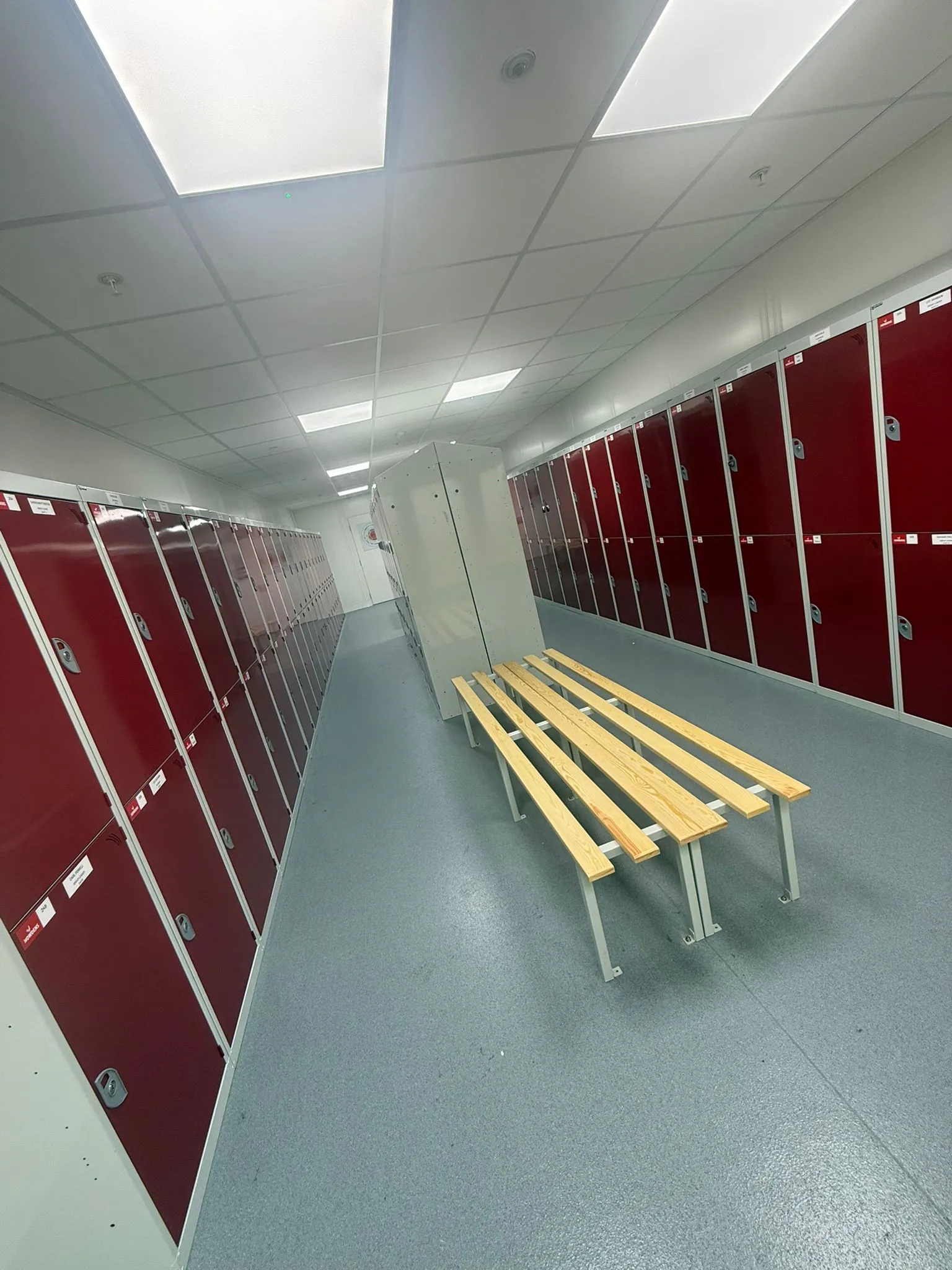
Commercial lockers provide secure personal storage for workplaces, changing rooms and shared facilities.
Shop Commercial Lockers by Type
Start by matching the locker design to the items being stored and the environment in which it will be installed. Product specifications, dimensions and locking options should then be checked before ordering.
Metal Lockers
A versatile choice for staff rooms, offices, schools, factories and changing facilities. Available in different door and compartment configurations for clothing, bags and personal belongings.
Shop Metal LockersPlastic & Wet-Area Lockers
Suitable options are available for swimming pools, leisure centres, changing rooms and other environments where moisture resistance is an important consideration.
View Plastic LockersWire Mesh Lockers
Open mesh construction provides airflow and clear visibility of stored contents, making wire mesh lockers useful for industrial equipment, workwear, PPE and secure workplace storage.
Shop Wire Mesh LockersLaptop & Mobile Phone Lockers
Secure storage for laptops, tablets, mobile phones and personal electronics, with charging options available across selected products.
Shop Device LockersPPE & Workwear Lockers
Designed for workplaces where uniforms, protective clothing, footwear and other work equipment need organised, individual storage.
Shop PPE LockersEmergency Service Lockers
Specialist storage for fire, police and ambulance environments where bulky workwear, protective equipment and personal kit require more space than a conventional locker.
Shop Emergency Service LockersWhich Locker Is Best for Your Environment?
There is no single locker design that suits every site. Start with the environment and the items users need to store, then compare materials, compartment size, ventilation and security.
Offices & workplaces
Metal lockers are a practical general-purpose choice for staff bags, coats and personal belongings. Smaller personal-effects lockers are useful where only phones, wallets and keys need storing.
Schools & education
Multi-tier lockers allow large numbers of pupils or students to receive individual storage without requiring a full-height compartment for every user.
Swimming pools & leisure centres
Choose a product specifically designed for humid or wet environments. Plastic and specialist wet-area lockers can provide an alternative to conventional general-purpose steel lockers.
Warehouses & factories
Metal, garment, PPE and wire mesh lockers can all be appropriate depending on whether staff need to store clothing, footwear, protective equipment, tools or personal belongings.
Fire, police & ambulance
Emergency-service lockers provide additional storage capacity for uniforms, helmets, footwear, protective clothing and operational equipment.
Phones, tablets & laptops
Choose dedicated device storage where electronic equipment needs to be separated into secure individual compartments, with charging capability where required.
Quick Locker Selection Guide
| Environment | Locker to consider | Typical storage | Key consideration |
|---|---|---|---|
| Office / workplace | Metal or personal-effects lockers | Coats, bags, phones and valuables | Match compartment size to what staff actually need to store |
| School / college | Multi-tier or school lockers | Books, bags, coats and devices | Balance compartment capacity against the number of users |
| Pool / wet changing room | Plastic or specialist wet-area locker | Clothing, bags and personal belongings | Confirm suitability for the level of moisture and intended environment |
| Warehouse / factory | Metal, PPE or wire mesh locker | Workwear, PPE, tools and personal items | Consider airflow, visibility and separation of workwear |
| Emergency services | Emergency-service locker | Bulky clothing, PPE and operational equipment | Allow enough internal space for the actual equipment being stored |
| Electronic devices | Phone, tablet or laptop locker | Phones, laptops and tablets | Decide whether secure storage alone or storage with charging is required |
Metal vs Plastic vs Wire Mesh Lockers
Material is one of the most important locker decisions because it affects where the unit can be used, how much ventilation it provides and the type of contents it is best suited to store.
Metal lockers
Steel lockers are the general-purpose option for many commercial applications. Premier's QMP range includes single-door and multi-tier configurations, making it possible to provide either a larger personal compartment or several smaller compartments within the same footprint.
Plastic & wet-area lockers
Where moisture is expected, choose a locker specifically designed for that environment. Plastic lockers can be particularly useful for pools, leisure centres and wet changing facilities, while specialist wet-area steel and laminate-door options are also available.
Wire mesh lockers
Wire mesh allows air to circulate around workwear and equipment while keeping the contents visible. This can make mesh lockers useful in warehouses, factories, construction environments and other industrial workplaces.
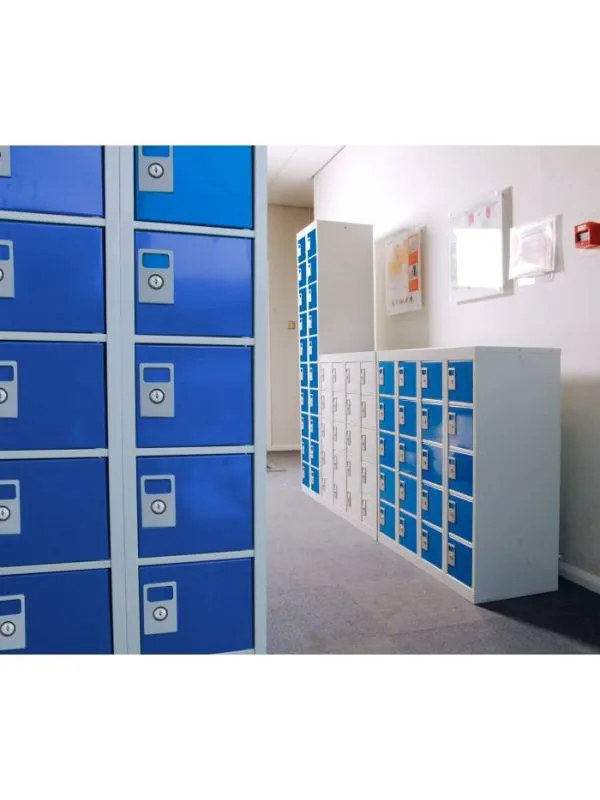
Multi-compartment lockers provide individual secure storage while making efficient use of available space.
Do not choose a locker by material alone
Check the complete product specification. The intended environment, locker construction, lock type, ventilation, dimensions and manufacturer guidance should all be considered before deciding whether a locker is suitable for a particular site.
How Many Locker Doors or Compartments Do You Need?
Increasing the number of compartments allows more people to use the same locker footprint, but each user receives less internal storage space. The best configuration therefore depends on what each person needs to store.
1-door lockers
A full-height compartment provides more room for coats, uniforms, bags and larger personal belongings. Often suitable where each person needs substantial storage space.
2-door lockers
Splitting a locker into two compartments increases user capacity while still providing useful space for bags, clothing and personal belongings.
3 & 4-door lockers
A practical compromise where more users need individual storage but the contents do not require a full-height compartment.
5, 6 & multi-tier lockers
Smaller compartments maximise the number of individual storage spaces and can work well for personal effects, smaller bags and shared facilities.
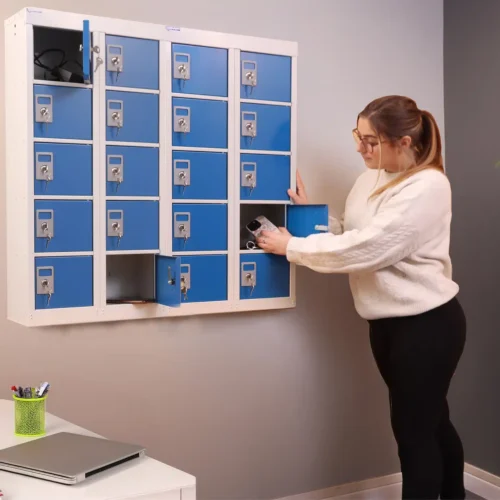
Personal-effects lockers provide secure individual compartments for phones, wallets, keys and other smaller valuables.
Personal-effects lockers for smaller valuables
A full-size locker can be unnecessary when the main requirement is simply to remove phones, wallets, keys and other small personal possessions from desks, production areas, classrooms or controlled workspaces.
High-compartment personal-effects lockers can provide a large number of individually secured spaces from a relatively compact unit.
View Personal Effects LockersSpecialist Lockers for PPE, Emergency Services & Electronic Devices
Some applications require more than a conventional staff locker. Specialist locker designs can provide extra capacity, ventilation, equipment organisation or secure charging for electronic devices.
Emergency service & PPE lockers
Fire, police and ambulance personnel may need to store significantly more equipment than a typical workplace locker user. Uniforms, protective clothing, helmets, footwear and operational kit can require larger compartments and a layout designed around the equipment.
For industrial workplaces, dedicated PPE and garment lockers can also help organise protective clothing and keep work equipment separated from general personal belongings.
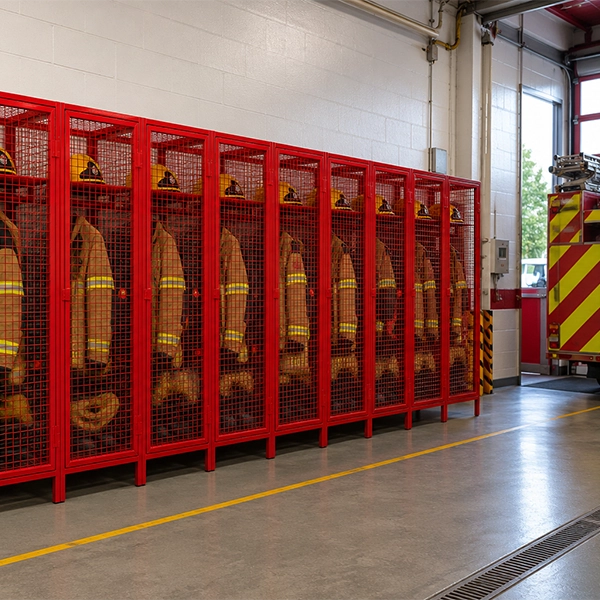
Specialist emergency-service storage provides space for protective clothing, PPE and operational equipment.
Laptop & tablet lockers
Dedicated compartments protect individual laptops or tablets and can make device distribution, collection and storage easier in schools and workplaces.
Mobile phone charging lockers
Where devices need charging as well as securing, selected lockers incorporate charging facilities within individual compartments. Check connection type, device capacity and electrical specification before purchasing.
Looking for gas cylinder storage?
Premier's wider mesh storage range also includes gas cylinder cages. These are specialist secure storage cages rather than personal lockers, so select them according to the cylinders, capacity, location and applicable site requirements. View wire mesh storage and gas cylinder cages →
Commercial Locker Buying Checklist
Before placing an order, check the practical details below. They can make the difference between a locker that simply fits the room and one that works properly for the people using it.
1. What will be stored?
List the largest items each user needs to store, including coats, bags, boots, helmets, PPE, tools or electronic devices.
2. How many users?
Calculate the number of individual compartments required and whether lockers will be permanently assigned or shared between shifts and visitors.
3. Measure the available space
Check height, width and depth as well as door-opening space, skirting boards, pipes, radiators, benches and circulation routes.
4. Check the environment
Confirm whether the locker will be located in a normal dry room, a damp changing facility, a wet environment, an industrial area or outdoors.
5. Choose the locking method
Locking options vary between ranges and can include key-operated cam locks, padlock fittings and other specialist locking systems. Check the individual product before ordering.
6. Consider accessories
Depending on the locker range, useful options can include stands, sloping tops, seating, identification labels and other accessories for changing-room installations.
Planning a complete locker room?
For larger installations, think beyond the individual locker. Locker positioning, user numbers, changing-room benches, cleaning access, circulation space and the way doors open can all influence the finished layout.
Commercial Lockers FAQs
Common questions when choosing lockers for workplaces, schools, leisure facilities and industrial environments.
What type of locker is best for a workplace?
For general staff use, metal lockers are often the most straightforward option. Choose the number of doors according to whether employees need to store full workwear and bags or only smaller personal belongings. PPE, garment and personal-effects lockers are available for more specialised requirements.
What lockers are suitable for swimming pools and wet changing rooms?
Choose lockers specifically designed for damp or wet environments. Plastic lockers and specialist wet-area locker ranges can be suitable choices. Always confirm the individual product's intended environment before ordering.
What are wire mesh lockers used for?
Wire mesh lockers combine secure storage with airflow and visibility of the contents. They are commonly considered for industrial workplaces, warehouses, workwear, PPE and equipment storage where ventilation or easy visual checking is beneficial.
Should I choose a 1-door or multi-door locker?
A 1-door locker gives one user more internal space and is useful for clothing, coats and larger bags. Multi-door lockers increase the number of users that can be accommodated in the same footprint but provide a smaller compartment for each person.
What are personal-effects lockers?
Personal-effects lockers contain multiple smaller secured compartments for items such as mobile phones, keys, wallets and other valuables. They are useful where users do not require space for coats or large bags.
Can lockers charge mobile phones, tablets and laptops?
Selected device lockers provide secure storage with integrated charging facilities. Other products are designed for secure device storage only, so check the individual specification to confirm charging type, capacity and compatibility.
What lockers are best for schools?
Multi-tier metal lockers are a popular approach where many pupils need individual storage. The compartment size should reflect whether students need to store books, bags, coats or electronic devices, and specialist device lockers can be used where laptops and tablets also require secure storage.
What lockers are suitable for fire and emergency services?
Emergency-service lockers are designed around the larger amount of clothing, PPE and equipment used by fire, police and ambulance personnel. Check the compartment dimensions carefully against the actual kit that needs to be stored.
What lock types are available on commercial lockers?
The available locking system depends on the product range. Options can include key-operated cam locks, padlock fittings and other specialist lock systems. Check both the standard lock supplied and any optional alternatives before ordering.
What should I measure before ordering lockers?
Measure the available height, width and depth, but also allow for door opening, skirting boards, pipes, radiators, changing-room benches and circulation space. For banks of lockers, check the complete run rather than only the dimensions of one unit.
Need Help Choosing Commercial Lockers?
Tell us how many users you need to accommodate, what will be stored and where the lockers will be installed. Our team can help you compare metal, plastic, wire mesh, PPE, device and specialist locker options from the range.
Guide reviewed: August 2026 by Premier Storage.