


Warehouse Steps
- Shelving/Racking & Storage
- 1




Warehouse Steps Buying Guide
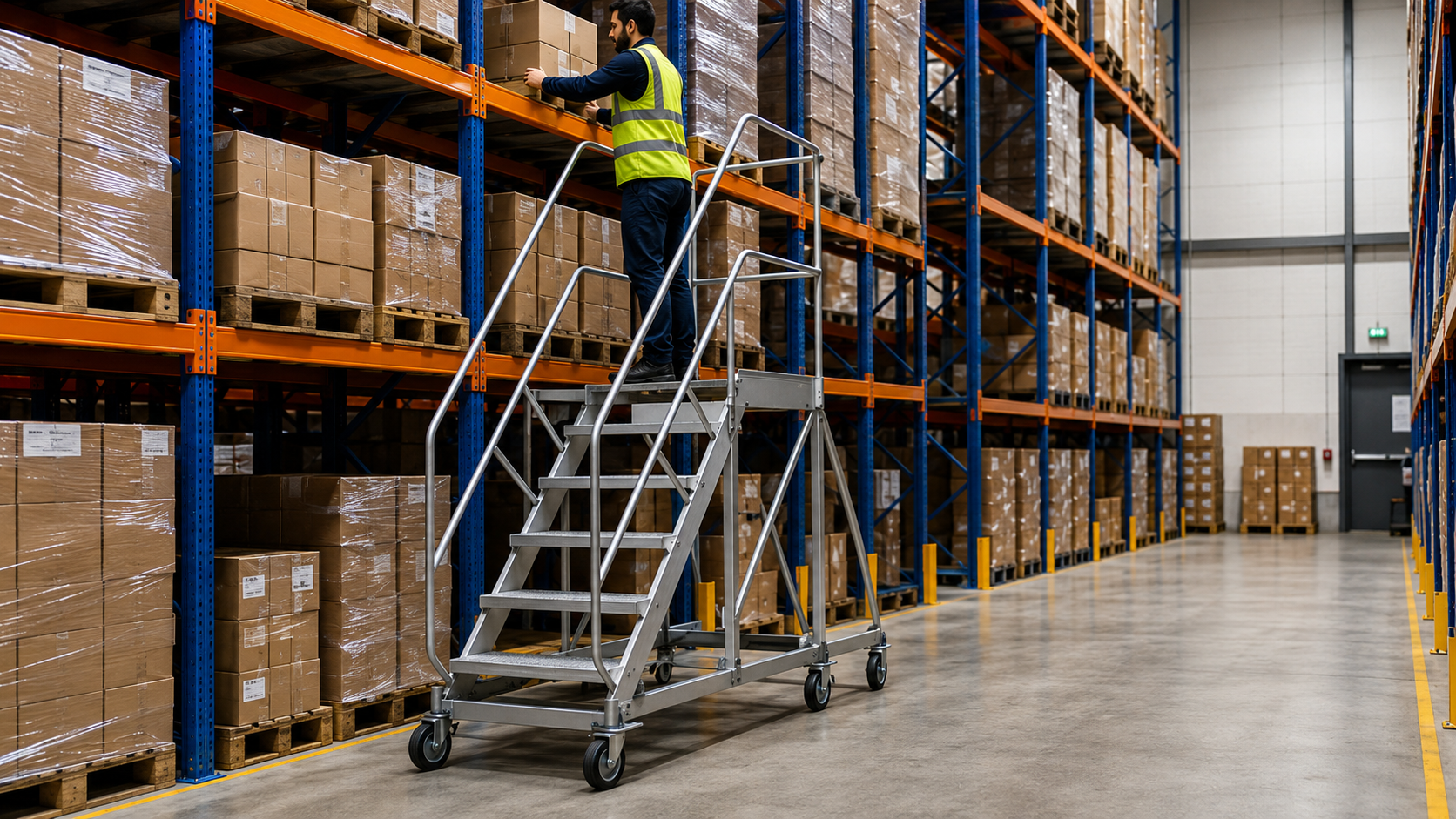
Warehouse steps provide safer and more practical access to shelving, racking, stock and elevated work areas. The right model will depend on the height you need to reach, the available floor space, how frequently the steps will be moved and the type of task being completed.
Our range includes portable stepladders, weight-reactive steps, spring-loaded steps, picking steps, mobile safety steps, folding platform steps and larger industrial work platforms.
How to Choose the Right Warehouse Steps
Consider the required height, task, working area and operating method before selecting a model.
Measure the required access height
Start by measuring vertically from the floor to the shelf, stock location or work area that needs to be reached. Compare this measurement with the platform height shown in the product specification.
Do not select steps solely from their overall height or number of treads. The platform height determines where the user will stand, while the overall height may include handrails, gates and other safety features.
Consider the type and duration of the task
- Occasional access: portable stepladders may suit short-duration, low-risk tasks.
- Frequent repositioning: weight-reactive or spring-loaded steps can be easier to move.
- Regular picking: picking steps or mobile safety steps offer a larger standing platform.
- Longer tasks: a work platform may provide more room and comfort.
- Restricted storage: folding or telescopic steps reduce storage space when not in use.
Check the available floor and aisle space
Check the complete open width and depth of the steps. Higher models normally require a larger footprint to maintain stability.
- Measure aisles and doorways
- Allow room to turn and position the unit
- Allow gates and folding frames to open
- Keep warehouse traffic away from the working area
Choose the appropriate mobility system
Warehouse steps use different movement and stabilisation methods, including carrying handles, tilt-and-push wheels, lockable castors, spring-loaded castors and weight-reactive systems.
Check how the selected model is moved, how it is immobilised and whether a separate brake or locking mechanism must be operated before climbing.
Review the platform, handrails and access
Consider tread width and depth, platform size, climbing angle and handrail arrangement. Models with safety gates or enclosed platforms may be more suitable for longer tasks.
Easy-slope designs can make regular ascent and descent more comfortable but require a larger floor area than steeper models.
Confirm the load capacity and product standard
Maximum load capacities vary. Check whether the stated capacity includes the user, tools and any materials being carried.
Relevant standards depend on the equipment type. Refer to the specification on the individual product page rather than assuming every product is certified to the same standard.
Compare Different Types of Warehouse Steps
Use the table below to compare the main types of warehouse access equipment and identify which designs are most suitable for your working environment.
| Step type | Best suited to | Movement and stability | Main buying consideration | View example |
|---|---|---|---|---|
| Portable stepladders | Occasional, short-duration access and general maintenance | Normally carried and folded for storage | Material, tread count, platform height and applicable product standard | View step ladders |
| Weight-reactive steps | Frequent access in warehouses, stockrooms and commercial environments | Spring-loaded castors allow movement when unoccupied and lower the frame when weight is applied | Platform height, overall footprint and castor operation | View weight-reactive steps |
| Spring-loaded steps | Regular industrial access where the unit is moved frequently | Castors retract under the user's weight so the base rests on the floor | Open dimensions, delivery requirements and lead time | View spring-loaded steps |
| Picking steps | Order picking, stock management and repeated access to shelving | Movement system can vary by tread count, including spring-loaded and tilt-and-push designs | Platform size, tread count and manoeuvring space | View picking steps |
| Mobile steps with safety gate | Regular access where additional protection around the platform is required | Model-specific wheels, castors and braking arrangements | Gate operation, handrail configuration and overall dimensions | View gated mobile steps |
| Folding platform steps | Workplaces where storage space is limited | Folding or telescopic frame for more compact storage | Folded dimensions, setup space and locking procedure | View folding platform steps |
| Easy-slope work platforms | Frequent access, longer tasks and applications requiring a larger working platform | Wheels and castors allow repositioning when the platform is not in use | Larger footprint, platform length, capacity and offloading requirements | View easy-slope platforms |
Platform Height, Working Height and Overall Height Explained
Platform height
The vertical distance from the floor to the platform or highest standing surface. This is normally the most useful measurement when comparing models.
Working height
An estimated height that the user may be able to reach while standing on the platform. This varies according to the user's height, reach, position and task.
Overall height
The full height of the unit from the floor to its highest point, which may include the handrails or safety gate.
Number of treads
The number of climbing steps provided. Manufacturers may describe the platform or top tread differently, so check the product specification.
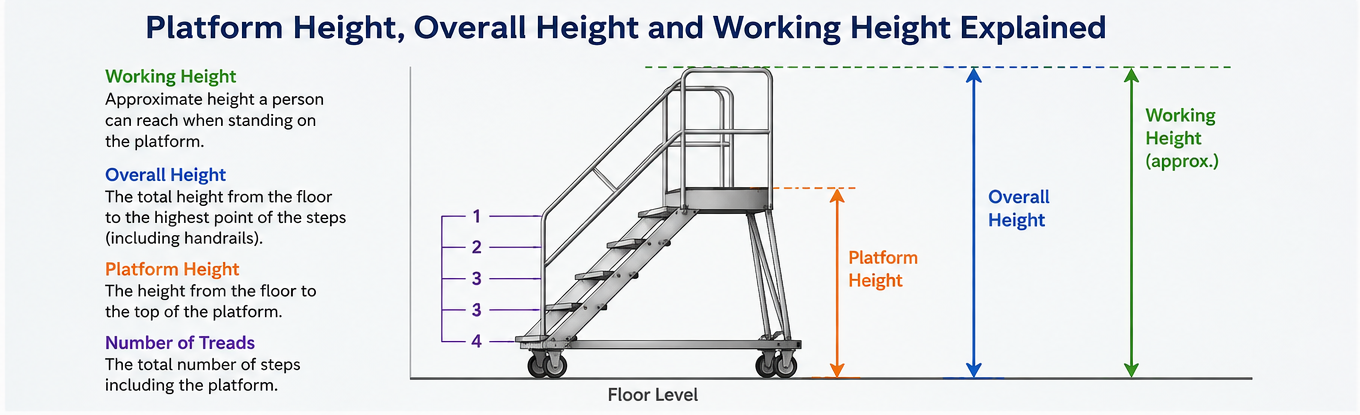
Important: working height is an estimate and should not be the only measurement used when selecting access equipment. Compare the platform height and full product dimensions with the task and working environment.
Warehouse Step Safety and Inspections
Work at height should be properly planned and the equipment selected according to the task, environment and level of risk. The user should be trained or otherwise competent to use the equipment correctly.
The Health and Safety Executive advises that ladders and stepladders are generally suitable for low-risk, short-duration work where a risk assessment confirms they are appropriate. Where a task would require someone to remain on a ladder or stepladder for more than approximately 30 minutes, alternative equipment should be considered.
Before use, check:
- Feet, castors and wheels
- Treads and standing platforms
- Handrails and safety gates
- Welded joints, fixings and frames
- Brakes, stabilisers and locks
- Corrosion, contamination or damage
Position access equipment on a firm, clean and level surface. Immobilise it correctly before use and do not move mobile steps while occupied.
Related Access Equipment
These more specific categories may also help:
For products designed to be repositioned regularly.
For larger standing areas and longer-duration tasks.
For portable, short-duration access.
Warehouse Steps FAQs
What height warehouse steps do I need?
Measure from the floor to the shelf or work area and compare this with the platform height. Also check the user's required reach, the task and the full dimensions of the unit.
What is the difference between platform height and working height?
Platform height is the distance from the floor to the standing surface. Working height is an estimated reach above the platform and varies between users and tasks.
How do weight-reactive warehouse steps work?
Spring-loaded castors allow the steps to move when unoccupied. When the user applies weight, the castors retract and the frame lowers onto its supporting feet.
Which warehouse steps are suitable for narrow aisles?
Compare the overall width, depth and turning space with the narrowest part of the route. Allow room to climb, open gates and keep traffic away from the working area.
Are warehouse steps supplied assembled?
This varies by product. Check the delivery and assembly information on the individual product page, particularly for larger mobile steps and work platforms.
Can warehouse steps be used outside?
Only use a product outdoors when the manufacturer confirms that its materials, finish, wheels and components suit the environment. Consider weather, surface conditions and storage.
Do warehouse steps need to be inspected?
Yes. Users should carry out pre-use checks, while employers should arrange detailed inspections at intervals determined by the manufacturer's instructions, risk assessment and conditions of use.
What is the maximum load for warehouse steps?
Maximum capacities vary. Check the individual specification and remember that the capacity may need to account for the user, tools and materials being carried.
Need Help Choosing Warehouse Steps?
Send us the required shelf height, preferred platform height, aisle width and details of how the steps will be used. Our team will help identify suitable options from the range.
Guide reviewed: August 2026 by the Premier Storage access equipment team.