

First Aid
- Shelving/Racking & Storage








Workplace First Aid Buying Guide
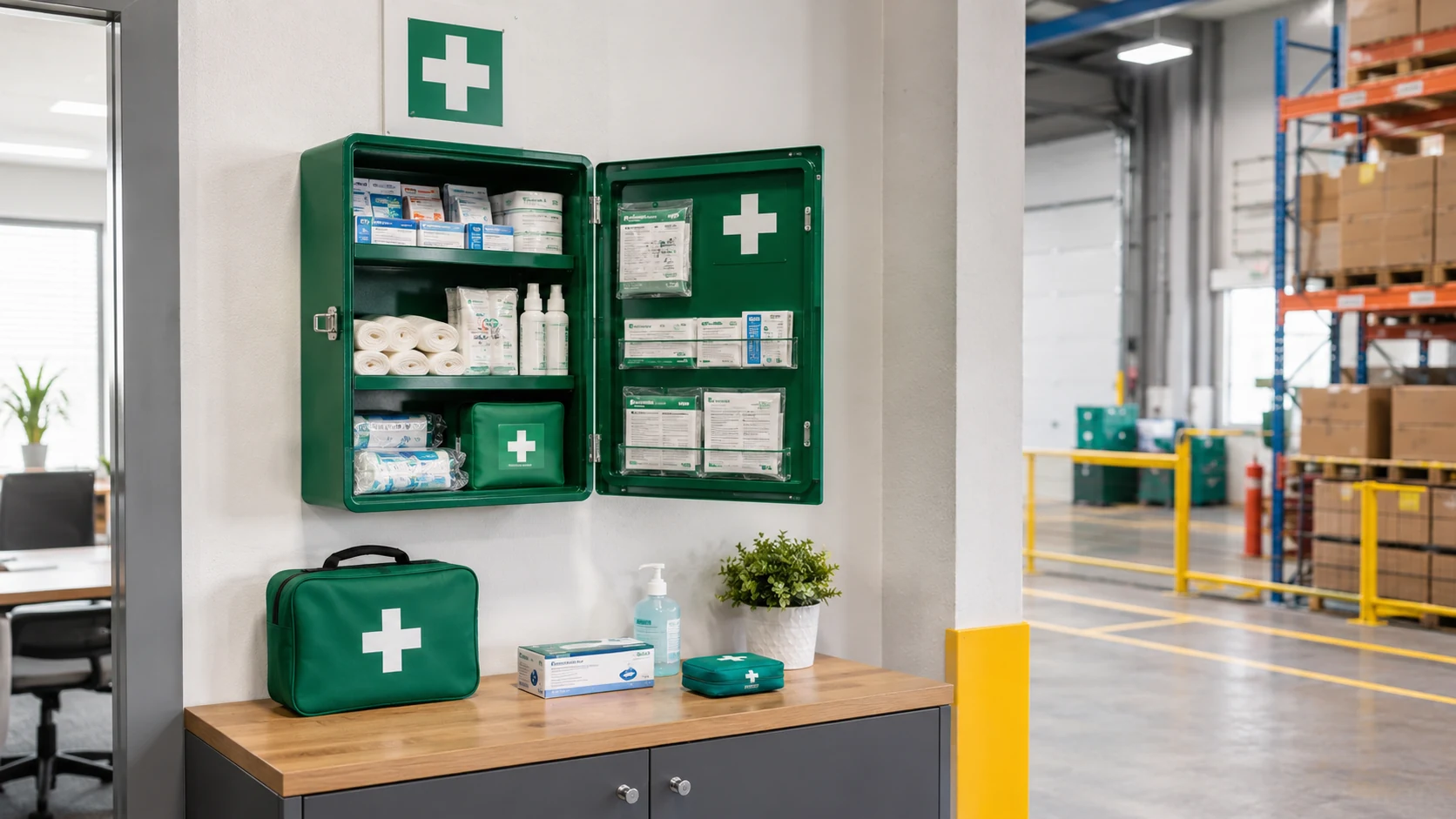
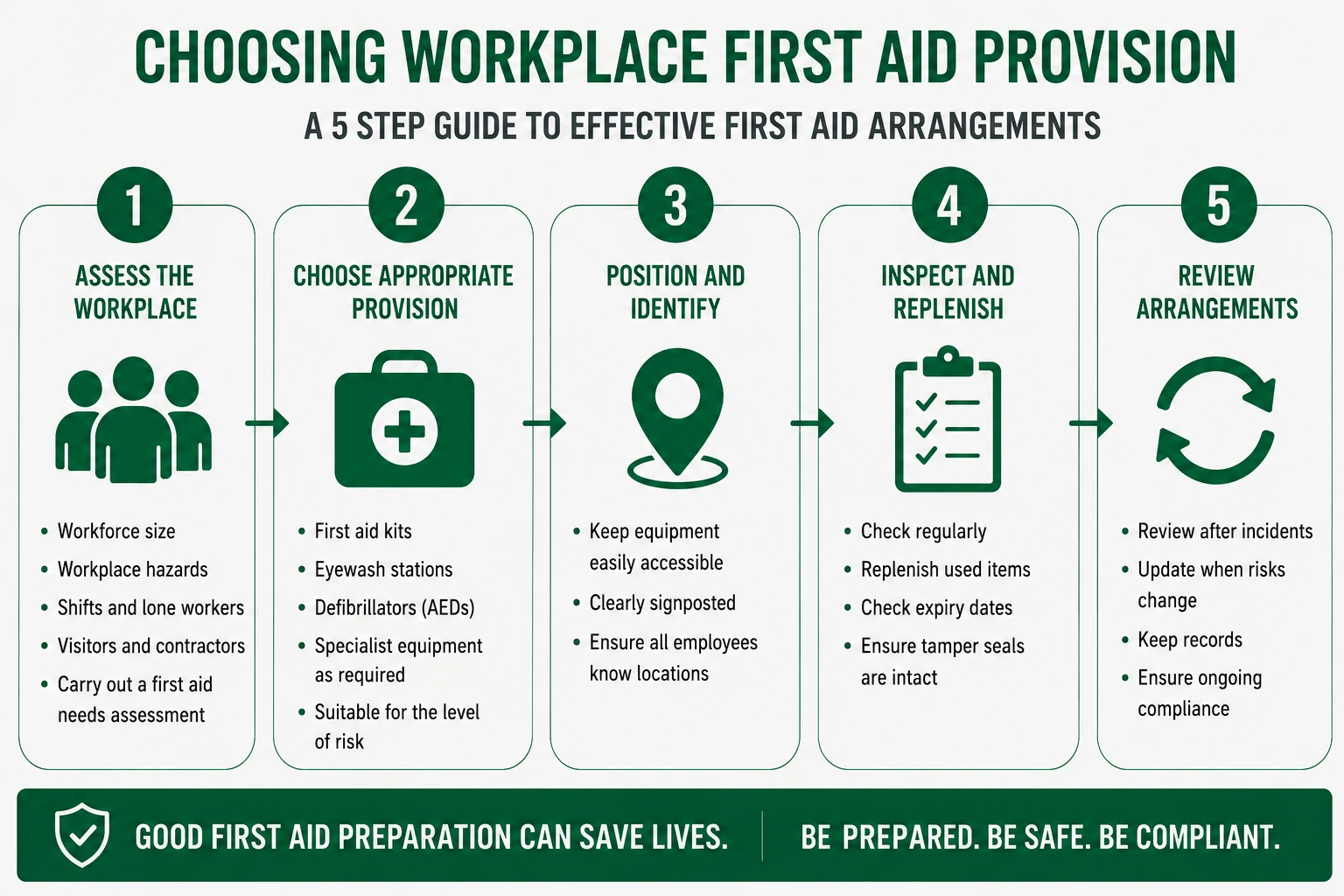
Effective workplace first aid starts with understanding the people, activities and risks within your organisation. The right provision may include a suitably stocked first aid kit, clearly identified first aid points, eyewash, specialist emergency equipment, accident-recording products and defibrillators, depending on the findings of your first aid needs assessment.
Premier Storage supplies workplace first aid products for offices, warehouses, workshops, schools, retail environments, industrial sites and mobile workers. This guide explains how to assess your requirements, compare the main product types and maintain first aid equipment after installation.
First aid provision should be matched to the actual workplace rather than selected from workforce size alone. Consider the work being carried out, foreseeable injuries or illness, staffing patterns, lone or remote workers, previous incidents and how quickly professional medical help can be reached.
Shop Workplace First Aid by Product Type
Start with the product family that matches your requirements, then check the individual specification, contents and intended use before ordering.
First Aid Kits
Workplace, personal, travel, burns and specialist first aid kits in a range of sizes and formats for different working environments.
View First Aid KitsFirst Aid Equipment
Eyewash, dressings, gloves, accident books, treatment equipment and other workplace first aid supplies for maintaining suitable provision.
View First Aid EquipmentDefibrillators
Automated external defibrillators and related responder products for organisations that choose to include an AED within their emergency arrangements.
View DefibrillatorsStart with a Workplace First Aid Needs Assessment
The Health and Safety Executive states that employers should assess what first aid arrangements are adequate and appropriate for their workplace. The assessment should reflect the work being carried out and the circumstances in which people work.
Consider the work and hazards
Review the type of work, workplace hazards and the likely consequences if someone is injured or becomes ill.
Review workforce size and patterns
Consider headcount, shifts, holidays and other absences, as well as how people are distributed across the premises.
Include lone and remote workers
Travelling, lone and remote workers may need different arrangements from people based close to a central first aid point.
Look at previous incidents
Past accident and ill-health records can help identify likely first aid needs and recurring workplace risks.
Consider access to medical help
Location, remoteness and the time likely to be required for emergency medical services to reach the workplace can affect provision.
Consider non-employees
Where appropriate, consider contractors, visitors and members of the public when deciding how first aid arrangements should work.
The basic workplace first aid arrangements
HSE guidance states that employers must have a suitably stocked first aid kit, an appointed person or people to take charge of first aid arrangements, and information for employees explaining those arrangements.
Read HSE first aid at work guidance →Assess your first aid needs →
Choosing a Workplace First Aid Kit
The contents of a workplace first aid kit should reflect the findings of the first aid needs assessment. A small, low-risk office and a busy warehouse or workshop may require different quantities, kit locations or specialist items.
Typical low-risk kit contents
For low-risk activities such as desk-based work, HSE gives an example list that includes items such as sterile plasters, sterile eye pads, triangular bandages, safety pins, sterile wound dressings, disposable gloves and general first aid guidance.
BS 8599 is useful guidance, not a blanket legal requirement. HSE advises that employers may look for kits meeting BS 8599, but the kit still needs to match or exceed what the workplace needs assessment identifies.
Think about quantity and location as well as contents
A suitable kit must also be accessible when needed. Larger buildings, multiple floors, separate work areas, remote teams or different shifts may justify several first aid points rather than relying on one central box.
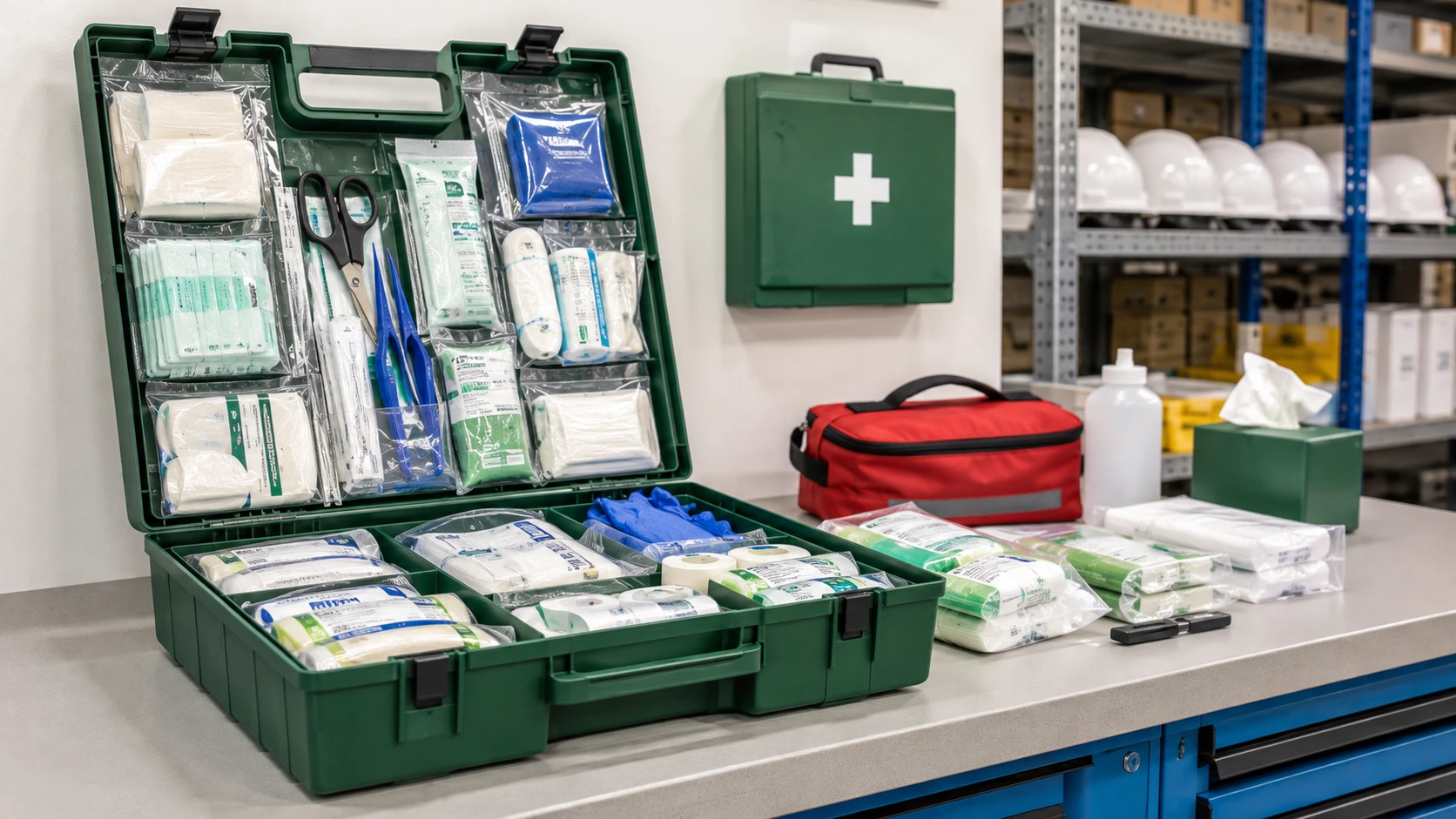
Low-risk offices
Focus on general wound care and everyday first aid supplies, then adjust quantities and locations for workforce size and working patterns.
Warehouses and workshops
Consider higher-risk activities, machinery, manual handling, cuts, burns or contaminants and whether additional or specialist supplies are appropriate.
Vehicles and mobile workers
Portable or vehicle first aid kits can help provide access where employees regularly work away from a fixed workplace.
First Aid Provision Beyond the Basic Kit
The needs assessment may identify equipment or facilities in addition to a general first aid kit. Select these products for the actual risks and emergency arrangements within the workplace.
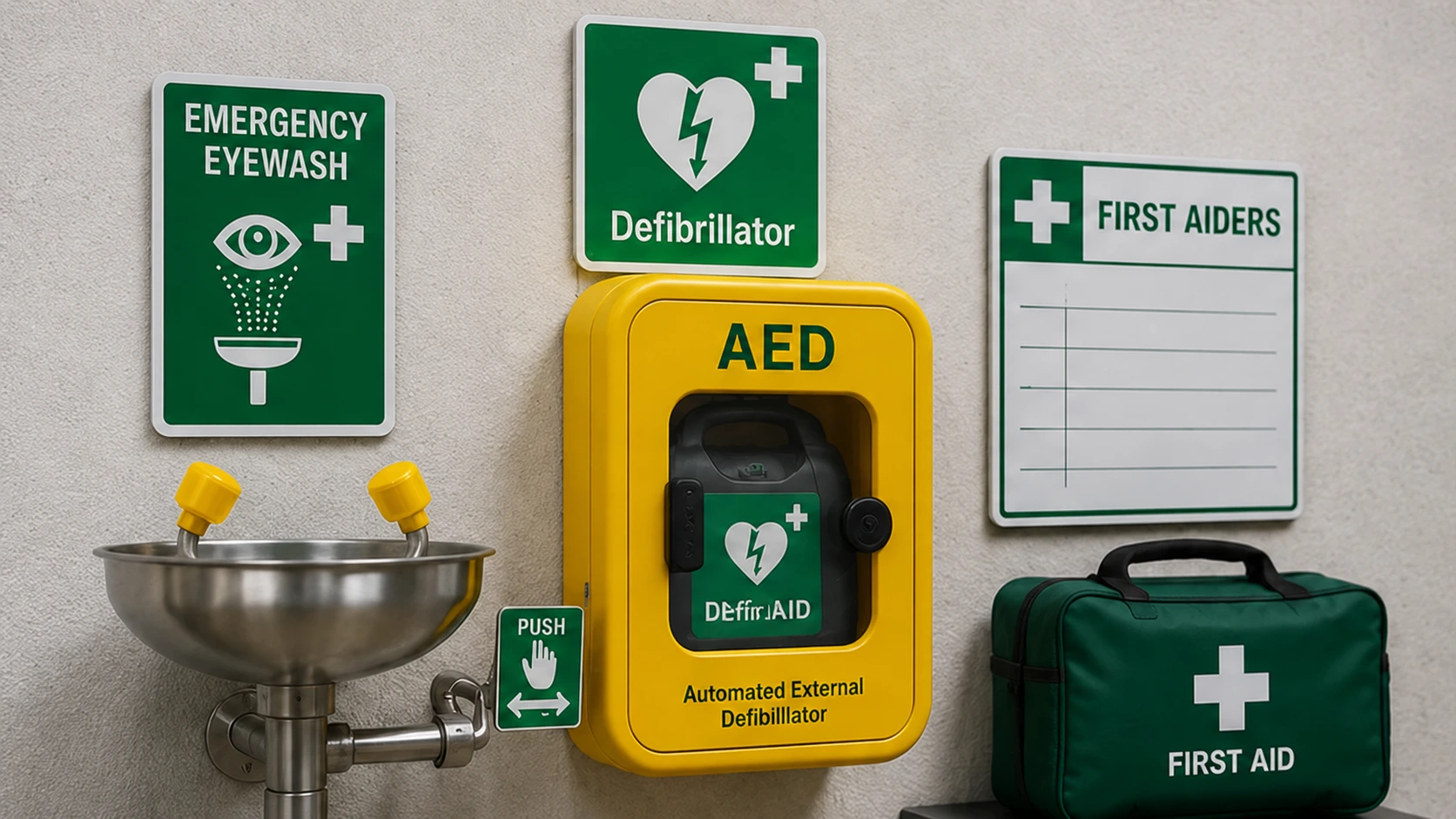
Eyewash and eye-care products
Where eye contamination is a foreseeable risk, consider appropriate eyewash provision and make sure its location is easy to identify and reach quickly.
Automated external defibrillators
Health and safety legislation does not require every workplace to have an AED. Where an organisation decides to provide one, it should be supported by suitable information, instructions, maintenance and emergency arrangements.
First aid signs and identified points
Clear signs can help employees and visitors locate first aid equipment, first aiders, eyewash and AEDs without unnecessary delay.
Body fluid and specialist response kits
Where the workplace needs assessment identifies a requirement, specialist spill, burns, bleed-control or other response products can complement general first aid provision.
Compare Workplace First Aid Products
Use this table as a starting point. The first aid needs assessment should determine the final equipment, quantities and locations required.
| Product type | Typical role | What to check | Important consideration |
|---|---|---|---|
| Workplace first aid kits | General first aid supplies for fixed workplaces | Contents, kit size, case type, portability and refill availability | Match contents and quantities to the needs assessment rather than relying on kit size alone |
| Portable and vehicle kits | Travelling, mobile, lone or remote workers | Portability, durability, contents and secure storage | Make sure the kit remains accessible when employees are away from the main premises |
| Eyewash | Workplaces where eye contamination is a foreseeable risk | Capacity, type, accessibility, expiry and mounting or storage method | Position equipment so it can be found and reached quickly |
| Defibrillators | Organisations choosing to provide an AED as part of emergency arrangements | Device type, pads, battery, cabinet, signage, information and maintenance | AED provision is not automatically required in every workplace by health and safety legislation |
| Accident books | Recording workplace accidents and incidents | Record format, confidentiality and secure storage | Organisations with more than 10 employees must keep an accident book or equivalent record system under social security law |
| First aid signs | Identifying first aid equipment, rooms, eyewash and AED locations | Visibility, location, wording and the equipment being identified | Signs should help people find the correct point without creating ambiguity |
First Aid Provision for Different Workplaces
Offices and commercial premises
General first aid kits and clearly communicated arrangements may be appropriate for low-risk office activities, with provision adjusted for workforce size, layout and working patterns.
Warehouses and workshops
Machinery, manual handling, vehicle movements and process hazards may justify additional first aid points, specialist products or more advanced first aider arrangements.
Public-facing and multi-occupancy sites
Consider visitors, customers, contractors and shared-site arrangements so employees know who is responsible and where equipment can be found.
First Aid Equipment Inspection Checklist
- 1Check that first aid kits and emergency equipment remain in their designated locations.
- 2Replace used, missing or damaged items promptly.
- 3Check expiry dates on sterile items, eyewash and other dated consumables.
- 4Confirm cabinets, seals, cases, signs and mounting arrangements remain serviceable.
- 5Follow manufacturer instructions for AED batteries, pads and routine checks.
- 6Review provision when staffing, work activities, premises or identified risks change.
Recording Accidents and First Aid Incidents
Accident records can help identify patterns and support future risk and first aid needs assessments. HSE states that organisations with more than 10 employees must keep an accident book under social security law, although an equivalent record system can be used.
It is also good practice for first aiders or appointed persons to record incidents they attend. Personal information should be stored securely and handled in line with the organisation's data-protection arrangements.
RIDDOR is separate from ordinary first aid recording. Certain specified workplace injuries, diseases and dangerous occurrences must be reported under RIDDOR.
Health and safety law poster
Employers must either display the HSE-approved health and safety law poster where workers can easily read it or provide each worker with the equivalent leaflet. This is a separate requirement from first aid provision but is often managed alongside other workplace safety information.
Workplace First Aid FAQs
What first aid equipment does a workplace legally need?
HSE states that employers must have a suitably stocked first aid kit, an appointed person or people to take charge of first aid arrangements, and information for employees. The exact equipment and level of provision should follow the workplace first aid needs assessment.
How do I know what size first aid kit to buy?
Do not rely on headcount alone. Consider workforce size together with work activities, hazards, shifts, absences, layout, lone or remote workers, previous incidents and access to medical services. Choose a kit whose contents and quantity match the needs assessment.
Does a workplace first aid kit have to comply with BS 8599?
No. HSE says there is no legal requirement under the Health and Safety (First-Aid) Regulations to buy a BS 8599 kit. The contents should instead reflect the outcome of the first aid needs assessment. A BS 8599 kit can be a useful starting point where it matches or exceeds those findings.
How often should first aid kit contents be checked?
There is no single inspection interval that suits every workplace. Check kits regularly, replace used items promptly and monitor expiry dates on sterile or dated products. Inspection frequency should reflect usage and workplace conditions.
Is a defibrillator legally required in every workplace?
No. HSE states that health and safety legislation does not require every workplace to have an AED. If an employer decides to provide one, suitable information and written instructions should be available and the equipment should be maintained appropriately.
Do I need more than one first aid kit?
Potentially. Multiple floors, separate buildings, large warehouses, remote work areas or different work teams may justify several accessible first aid points. The decision should follow the needs assessment rather than a fixed universal rule.
When is an accident book required?
HSE states that organisations with more than 10 employees must keep an accident book under social security law, although the details may be kept in an equivalent record system. Certain incidents also have separate reporting requirements under RIDDOR.
Should first aid arrangements include visitors and members of the public?
HSE says employers should consider first aid for non-employees, including members of the public, as part of the needs assessment where relevant to the workplace.
Need Help Choosing Workplace First Aid Products?
Tell us about your workplace, workforce size, activities, identified hazards and the products you are considering. Our team can help you navigate the available first aid kits, equipment, AEDs, signs and related workplace safety products.
Guide reviewed: August 2026 by Premier Storage.