

Spill Control
- Shelving/Racking & Storage


Spill Control Buying Guide
Spill control products help workplaces prepare for leaks and spillages, contain liquids and support a safer, more organised response. The correct solution depends on the liquid involved, the likely spill volume, where the incident may occur and whether the priority is immediate response, drain protection or secondary containment.
Our range includes spill kits, absorbent pads, rolls and socks, drip trays, drain covers, spill containment products and supporting accessories for industrial, commercial, fleet and facilities-management environments.
Shop Spill Control by Product Type
Choose the right type of equipment for spill response, leak prevention, drain protection or secondary containment.
Spill Kits
Portable, break-pack, drum, cabinet and wheeled-bin kits for planned workplace spill response.
View Spill KitsAbsorbents
Pads, rolls, socks, pillows and other formats for absorbing or containing compatible liquids.
View AbsorbentsDrip Trays
Trays and bunded formats for catching routine drips and leaks beneath containers or equipment.
View Drip TraysDrain Protection
Drain covers, mats, seals and related equipment for protecting drainage routes during an incident.
View Drain ProtectionSpill Containment
Bunds, pallets and flexible containment products for drums, IBCs and larger storage applications.
View ContainmentSpill Accessories
Bags, labels, dispensers, PPE-related items and supporting equipment for completing a spill station.
View AccessoriesChoose Products by Spill Type
Select absorbents and kits that are compatible with the liquid you need to manage. For hazardous substances, always follow the product information, safety data sheet, COSHH assessment and your site procedures.
Choosing the Right Spill Kit Capacity and Format
Choose a kit that reflects the largest credible spill, the liquid involved and how quickly the equipment needs to be moved to the incident.
Stated absorption capacities are product ratings. Actual performance can vary according to the liquid, absorbent type, surface and response method.
Spill Response Planning
Equipment works best as part of an agreed and practised site procedure.
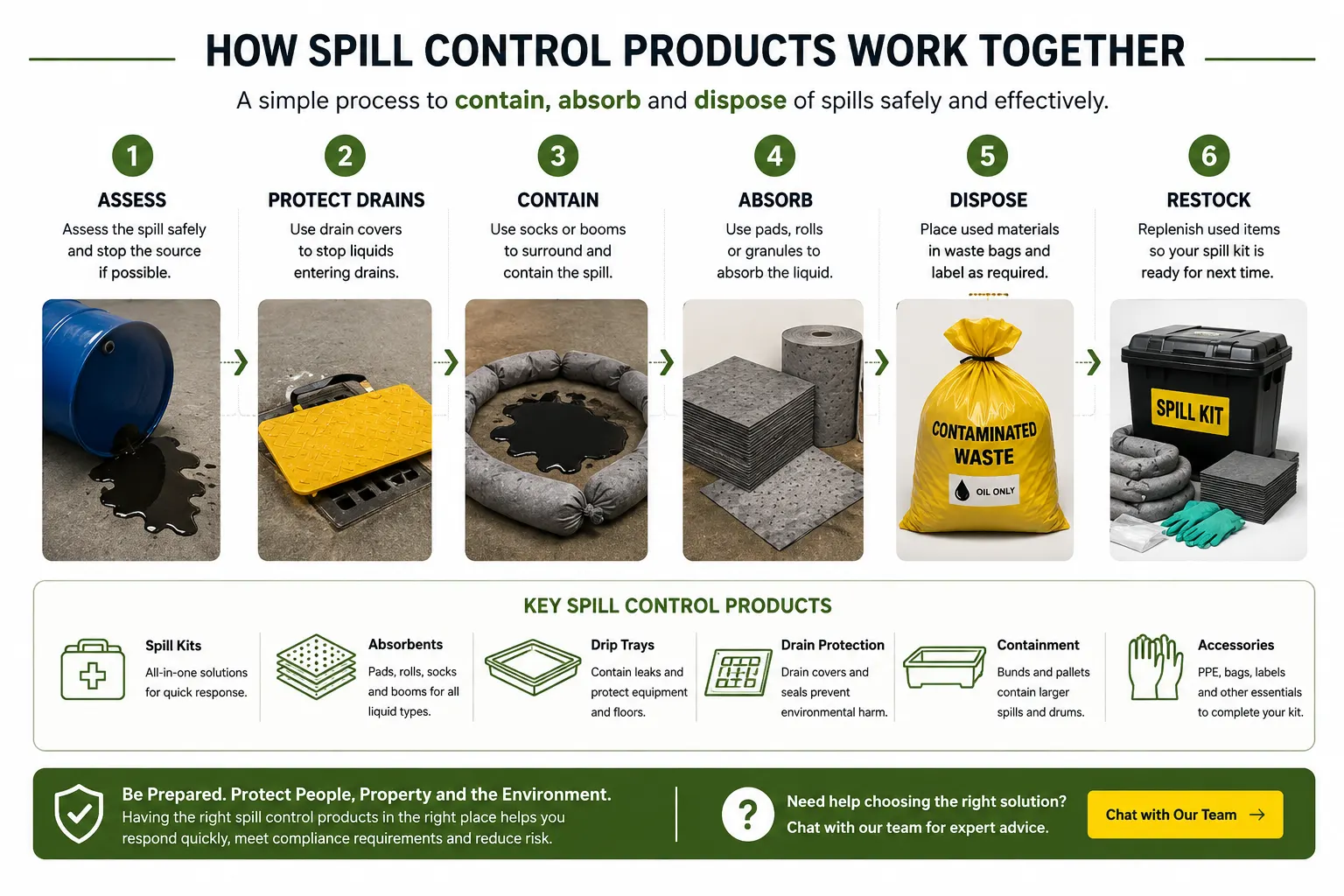
- 1 Assess and raise the alarm. Identify the immediate risk and follow the site emergency procedure.
- 2 Stop the source only when safe. Do not exceed your training, authorisation or available protective equipment.
- 3 Protect drains and sensitive areas. Use compatible drain covers, socks or booms where the site plan requires them.
- 4 Contain and absorb. Select products compatible with the liquid and use them in accordance with their instructions.
- 5 Manage contaminated materials. Segregate, label and dispose of used absorbents according to the contaminant and applicable waste procedure.
- 6 Report, review and restock. Record the incident where required and replace used or damaged kit components.
Important: isolate the area and follow emergency arrangements where a spill involves an unknown substance, dangerous reaction, toxic vapour, fire or explosion risk, injury, or a release beyond the responder's training and equipment.
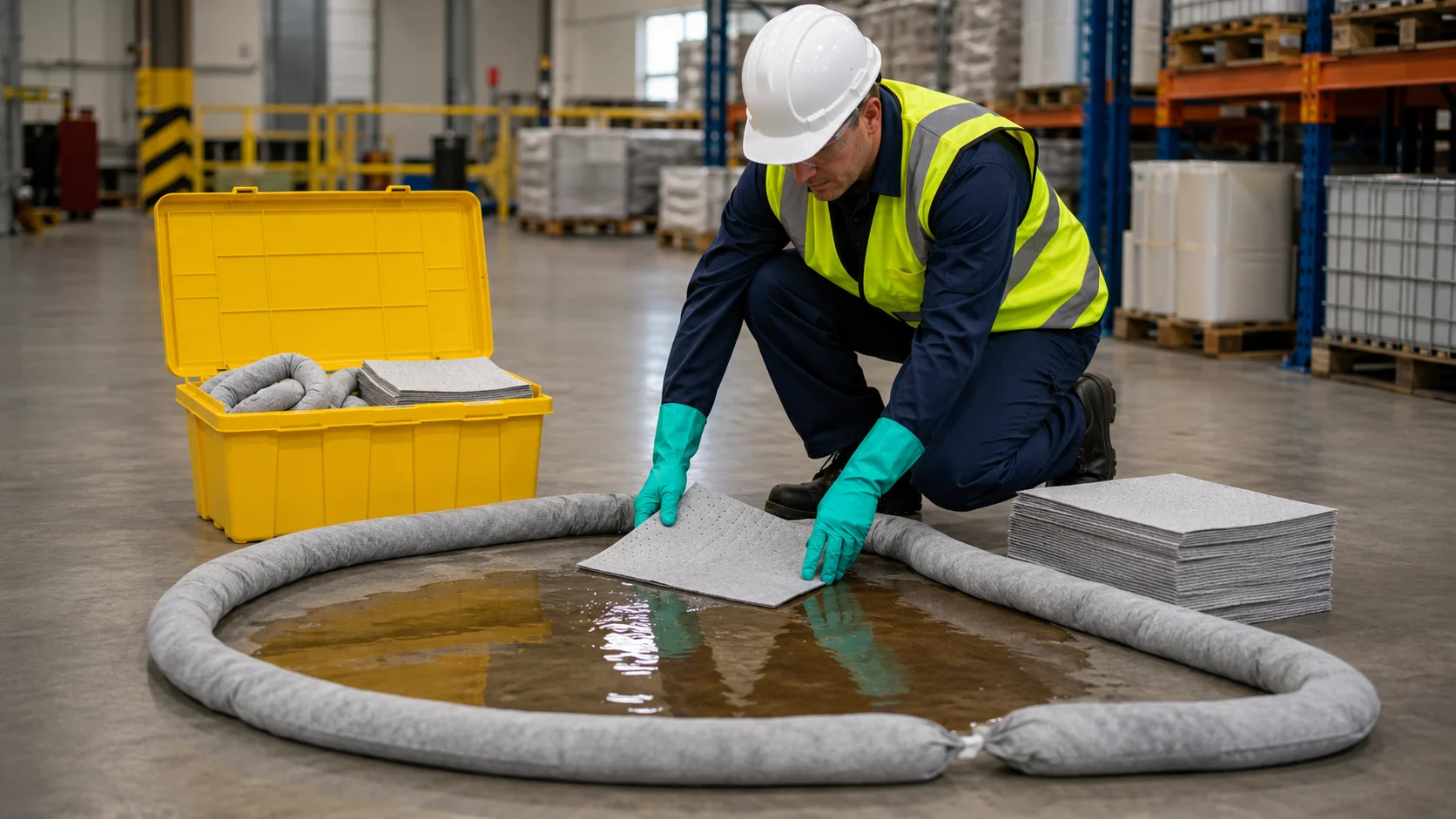
Build Confidence with On-Site Spill Response Training
Effective preparedness involves both suitable equipment and people who understand the agreed response. Premstor provides practical on-site spill kit and spill response training, from basic awareness through to first-responder and train-the-trainer options.
Safety and Preparedness
- Identify likely substances and keep relevant product and safety information accessible.
- Check absorbent and PPE compatibility before responding to chemical spillages.
- Store equipment where it is visible and accessible without placing staff in danger.
- Inspect kits regularly and replace missing, damaged or contaminated items.
- Train staff, allocate responsibilities and practise foreseeable emergency procedures.
- Determine how contaminated absorbents and other waste will be classified, contained and removed.
Related Equipment
Storage options for workplace substances and cleaning chemicals.
Storage products for drums, barrels and liquid containers.
Dedicated storage for workplace protective clothing and equipment.
Supporting cleaning products for industrial and commercial environments.
Spill Control FAQs
Which spill kit do I need?
Identify the liquid, likely quantity, response location and required mobility. Select a kit that is compatible with the substance and large enough for the credible spill scenario identified by your risk assessment.
What is the difference between general-purpose, oil and chemical absorbents?
General-purpose absorbents are intended for many common workplace liquids. Oil-selective products are designed for oils and fuels, while chemical absorbents are made for compatible chemical liquids. Always check the individual specification and safety information.
How large should my spill kit be?
Base the capacity on the largest credible spill rather than the smallest routine leak. Consider the size of containers, transfer operations, site layout and whether multiple kits or a central absorbent station would provide better coverage.
Where should spill kits be stored?
Store them close enough to foreseeable spill locations for prompt access, but not where the same incident could make the kit unsafe or inaccessible. Locations should be clearly identified within the site's emergency arrangements.
Do spill kits expire?
There is no single expiry rule covering every spill kit. Check the manufacturer's information and regularly inspect packaging, absorbents, PPE and other components for damage, contamination or deterioration.
Can used absorbents be reused?
Most disposable absorbents should not be reused after contamination. Follow the manufacturer's instructions and your waste procedure, taking account of the liquid absorbed.
How should used spill-control materials be disposed of?
The correct waste route depends on the substance absorbed. Used materials should be contained, labelled, classified and removed in accordance with the site's waste procedure and applicable requirements.
Should staff receive spill response training?
Staff assigned a spill-response role should understand the site's procedures, equipment, limitations and escalation arrangements. Training should reflect the substances, risks and responsibilities present at the workplace.
Need Help Choosing Spill Control Products?
Tell us the liquid involved, likely spill volume, storage or operating environment and whether you need a portable kit, absorbents, drain protection or containment. Our team will help identify suitable options from the range.
Guide reviewed: August 2026 by the Premier Storage spill control team.